

The nutritional information for chicken wings can vary sharply between a plain roasted serving and a breaded, fried, heavily sauced order. Size also matters because “one wing” may refer to either a whole wing or a smaller flat or drumette.
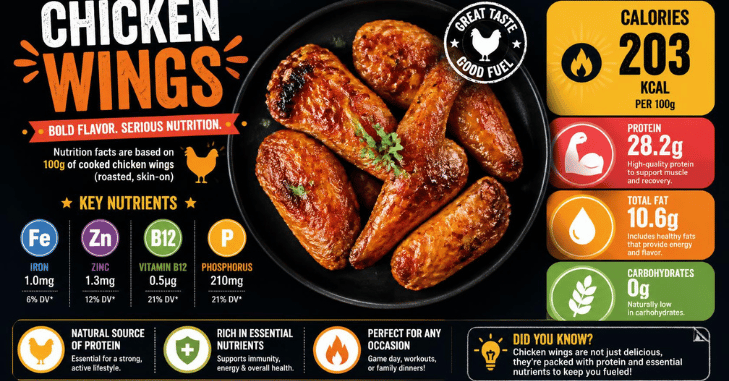
Plain roasted chicken wings with skin provide about 254 calories, 23.8 grams of protein, 16.9 grams of fat, and no carbohydrates per 100 grams of edible meat and skin. Battered and fried wings provide about 324 calories, 19.9 grams of protein, 21.8 grams of fat, and 10.9 grams of carbohydrates per 100 grams.
Chicken Wing Nutrition at a Glance
| Preparation and serving | Calories | Protein | Fat | Carbohydrates | Sodium |
| Plain roasted meat and skin, 100 g edible portion | 254 | 23.8 g | 16.9 g | 0 g | 98 mg |
| Battered and fried meat and skin, 100 g | 324 | 19.9 g | 21.8 g | 10.9 g | 320 mg |
| Difference caused by battering and frying | +70 | -3.9 g | +4.9 g | +10.9 g | +222 mg |
The figures above compare equal edible weights. They don’t include restaurant sauce, dipping sauce, or extra seasoning. Those additions can affect the nutritional value of the final meal more than the poultry itself.
Key Takeaways
- Plain roasted wings contain protein and no natural carbohydrates.
- Breading adds carbohydrates and often absorbs cooking oil.
- Sweet sauces add sugar, while buttery sauces add fat.
- Salty marinades and dry seasonings can raise sodium levels.
- Counting individual pieces is less accurate than weighing the edible portion.
- Menu or package nutrition information should take priority when it is available.
Why Chicken Wing Calorie Counts Differ So Much
A calorie estimate is useful only when the serving is clearly defined. Whole wings include the drumette, flat, and tip. Restaurant orders usually count the drumette and flat as separate pieces.
Bone weight creates another problem. A plate may weigh 300 grams before eating, but some of that weight remains as bones and cartilage. Nutrition databases generally describe the edible meat and skin rather than the discarded bones.
Cooking also changes the water content. Roasted meat weighs less after moisture escapes, so 100 grams of cooked food can appear more calorie-dense than 100 grams of raw food. Added oil, flour, butter, sugar, and sauce can raise the total further.
Nutritional Information for Chicken Wings Check the serving size before comparing nutrition labels. All listed calories and nutrients apply to the stated serving rather than necessarily applying to the entire package or restaurant order.
Nutritional Information for Chicken Wings by Cooking Method
Roasted or Baked
Plain roasted meat and skin contain 254 calories per 100 grams of edible food. That serving also supplies nearly 24 grams of protein and about 17 grams of fat. It contains no carbohydrates before breading, glaze, or a sugar-containing rub is added.
Baking doesn’t guarantee a low-calorie result. A large amount of oil or butter still contributes calories. Measure added fat rather than pouring it directly from the bottle.
For practical meal ideas, Mindygest’s guide to balanced one-pan meals shows how poultry can be served with vegetables, grains, and other filling ingredients.
Air-Fried
An air fryer can crisp the skin with little or no added oil. The nutrition profile of air-fried wings may resemble that of baked wings when the recipe uses the same ingredients.
The appliance itself doesn’t remove the calories already present in the skin. Oil sprays, breading, and sauce must still be counted. Use the nutrition information for the exact recipe or product instead of treating every air-fried portion as nutritionally equal.
Deep-Fried Without Breading
Unbreaded fried wings remain low in carbohydrates, but they may absorb oil. The amount of oil absorbed depends on the frying temperature, cooking time, drainage, and surface area of each piece.
“Naked” doesn’t mean calorie-free or sodium-free. It usually means that the wings don’t have a flour coating. Seasoning and sauce can still change the nutritional values.
Breaded or Battered and Fried
Battered and fried wing meat and skin contain about 324 calories per 100 grams. The same amount contains about 10.9 grams of carbohydrates and 21.8 grams of fat.
A flour-coated, fried wing can provide about 103 calories, 8.4 grams of protein, and 7.1 grams of fat once the bone is excluded. Piece sizes still vary, so that figure shouldn’t replace a restaurant’s published menu data.
How Sauces, Rubs, and Dips Change the Numbers

Plain poultry contains no carbohydrates, but common coatings can change that quickly. Flour, cornstarch, breadcrumbs, honey, barbecue sauce, and sweet chili glaze all add carbohydrates.
Buffalo-style sauce may contain butter or another added fat. Garlic Parmesan coatings often include oil, butter, cheese, or mayonnaise. Ranch and blue cheese dips count as separate servings and shouldn’t be left out of a food log.
Sodium may become the main concern in a restaurant order. A daily sodium intake below 2,300 milligrams is commonly recommended for adults. On a nutrition label, 5% of the Daily Value or less is considered low, while 20% or more is considered high for one serving.
Try these steps when you want more control:
- Request sauce on the side.
- Choose an unbreaded option.
- Use a measured amount of seasoning.
- Compare sodium levels across menu items.
- Include dips in the final calculation.
- Pair the meal with unsalted vegetables.
Mindygest’s article about cold-weather meals offers ideas for pairing protein with vegetables, legumes, and grains.
How Many Calories Are in 6, 10, or 12 Wings?
There isn’t one reliable number that applies to every order. A whole roasted wing containing approximately 34 grams of edible meat and skin has about 86 calories. Smaller restaurant sections may contain fewer calories because a whole wing is divided into a flat and a drumette.
Using the 86-calorie estimate for a whole roasted wing:
| Portion of whole roasted wings | Estimated calories before sauce |
| 6 wings | About 516 |
| 10 wings | About 860 |
| 12 wings | About 1,032 |
Don’t apply this table unthinkingly to six small wing sections. Check whether the restaurant counts whole wings, flats, drumettes, or a mixture.
A More Accurate Way to Track a Homemade Serving

Use this simple method:
- Weigh the cooked serving before eating.
- Weigh the leftover bones afterward.
- Subtract the bone weight from the starting weight.
- Multiply the number of edible grams by the matching database value.
For plain roasted meat and skin:
- Calories: edible grams × 2.54
- Protein: edible grams × 0.238
- Fat: edible grams × 0.169
For example, 150 grams of edible roasted meat and skin provides about 381 calories, 35.7 grams of protein, and 25.4 grams of fat. This method accounts for differences in piece size without requiring you to guess how much bone was included.
Are Chicken Wings Healthy?
Chicken wings can fit into a balanced diet, but their preparation method and portion size shape the answer. Plain wings provide protein, selenium, zinc, niacin, vitamin B6, and other nutrients. The skin also contributes meaningful amounts of total fat and saturated fat.
Saturated fat, sodium, and added sugars are nutrients that many people should limit. A large fried order with sweet sauce and a creamy dip may supply substantial amounts of all three.
A practical meal could combine a moderate portion of wings with vegetables, beans, or a whole grain. A balanced eating pattern also includes variety across food groups and leaner protein choices when possible.
For more ways to build complete meals, see Mindygest’s Dutch oven recipe guide or browse its broader collection of food articles.
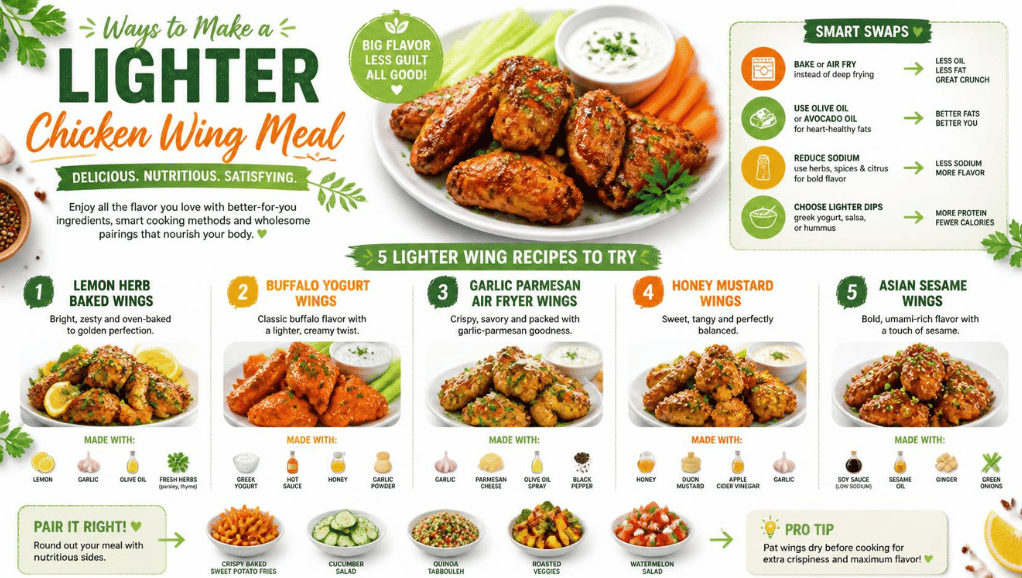
Ways to Make a Lighter Chicken Wing Meal

You don’t need to remove every flavorful ingredient. Focus on the additions that make the largest difference.
- Bake, roast, grill, or air-fry the wings instead of deep-frying them.
- Skip flour coatings when you want fewer carbohydrates.
- Measure oil before cooking.
- Use herbs, pepper, garlic, paprika, or citrus for flavor.
- Serve sauce and dip in small, separate dishes.
- Add vegetables or salad instead of another fried side.
- Decide on the serving size before placing the food on the table.
- Check packaged products for calories, sodium, and serving size.
When cooking at home, poultry must reach an internal temperature of 165°F or 73.9°C. Measure the temperature at the thickest part with a food thermometer.
Make The Serving Match Your Goal
Nutritional information for chicken wings starts with the preparation method, then accounts for breading, sauce, dip, and edible weight. That approach produces a more reliable estimate than counting pieces alone.
For a lighter plate, choose an unbreaded cooking method, keep sauce portions controlled, and add vegetables or another fiber-rich side. People managing high blood pressure, high cholesterol, kidney disease, diabetes, or another medical condition should seek personalized guidance from a qualified clinician or registered dietitian.
Frequently Asked Questions
A 100-gram edible portion of plain roasted wings provides about 254 calories, 23.8 grams of protein, 16.9 grams of fat, and no carbohydrates. Breading, frying, sauce, and seasoning can raise the amounts of calories, carbohydrates, fat, and sodium.
Yes. Plain roasted meat and skin provide nearly 24 grams of protein per 100 grams. The amount per piece depends on the size of its edible portion.
Plain roasted meat and skin contain no carbohydrates. Flour, batter, breadcrumbs, and sweet sauces add carbohydrates.
Not automatically. Boneless products are often breaded pieces of breast meat that have been fried and covered in sauce. Compare the serving size, calories, saturated fat, sodium, and added sugar on the menu or nutrition label.
They can contain fewer calories than deep-fried versions when little oil is used. Breading, oil, butter, and sauce still contribute calories regardless of the appliance.
Use the restaurant’s or manufacturer’s nutrition information first. For homemade food, weigh the cooked serving, subtract the weight of the leftover bones, and calculate the edible portion using a matching cooked-food entry.