

Legal forms often use formal words for simple ideas. Understanding those terms can make probate papers, wills, estate documents, and tax forms much easier to read. Also worth reading: Ooga Booga Meaning.
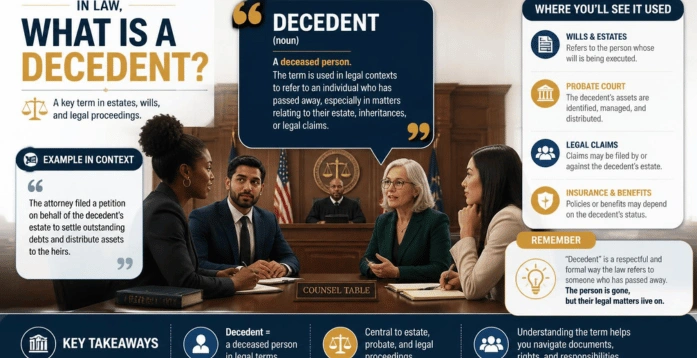
Short answer: A decedent is a person who has died, especially in legal discussions involving estates, trusts, wills, probate, and taxes. The word identifies the person whose property and legal affairs are being handled after death. It does not refer to the estate itself or to the person managing it.
| Key question | Plain-English answer |
| Who does the term identify? | The person who has died |
| Where is it commonly used? | Probate, estate, trust, court, and tax documents |
| What is the estate? | Money, property, and other assets owned by the person at the time of death |
| Who may manage the estate? | An executor, administrator, or other personal representative |
| What if there is no valid will? | State intestacy law usually determines inheritance. |
| Does every asset require probate? | No. Some property may transfer outside probate. |
| Are tax filings sometimes required? | Yes. A representative may have federal and state filing duties. |
TL;DR
- The word refers to the person who died, not to the estate or executor.
- An estate generally contains property and financial interests owned by the person at the time of death.
- A will can direct how qualifying property should pass, subject to applicable law.
- Without a valid will, state intestacy rules determine who inherits probate property.
- Some jointly owned assets and beneficiary-designated accounts may pass outside probate.
- The personal representative may need to handle debts, distributions, court filings, and tax returns.
What Does Decedent Mean in Law?
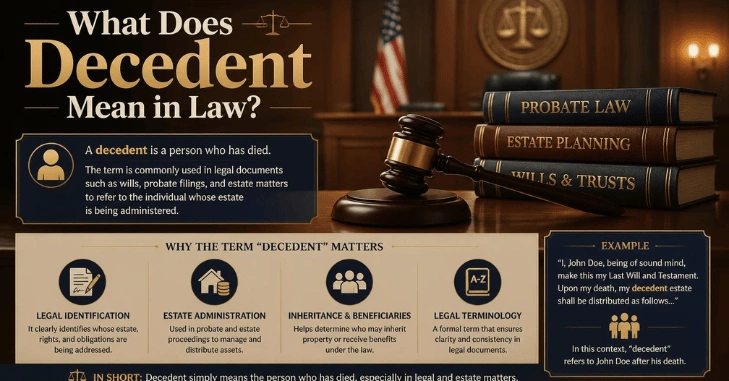
In ordinary conversation, most people say “the deceased person” or “the person who died.” Legal documents often use a more specific noun because courts, lawyers, financial institutions, and tax agencies need a consistent way to identify the person whose affairs are being settled.
Decedent: The term is commonly used in estate and trust law. The person’s assets may form an estate that is distributed according to a will, trust, beneficiary designation, state law, or another applicable legal arrangement.
The word itself does not tell you whether the person had a will, owned a large estate, owed debts, or created a trust. Those questions require additional information. Readers who want more plain-English coverage of legal processes can also browse Mindygest’s law guides and legal explainers.
Is It Different From “Deceased”?
The two words usually refer to the same basic fact: a person has died. The main difference lies in how the words are used.
“Deceased” commonly functions as an adjective, as in “the deceased owner.” It can also be used as a noun. The legal term discussed in this article is more strongly associated with estate, probate, trust, and tax documents.
So, a sentence such as “the deceased person owned the property” and a probate document that uses the more formal legal term may refer to the same individual. For a closer look at this, see Correct Spelling, Legal Meaning, Uses, Notarization Requirements, Differences From Declarations.
The wording matters most when a form assigns different roles. A document might separately identify the person who died, the estate, the executor, the beneficiaries, and the heirs. Those labels are not interchangeable.
What Is the Estate After Someone Dies?
An estate generally includes the money, property, and other assets a person owned at the time of death. Estates can include real estate, personal property, financial accounts, and other valuable interests.
That does not mean every asset must pass through a court proceeding. Some property may transfer directly because of arrangements made before death. The exact result depends on ownership, beneficiary designations, state law, and the type of asset involved.
Real estate can create additional questions about titles, deeds, ownership, and transfers. Mindygest’s guide to working with a commercial real estate attorney explains broader property-law issues that can become relevant when ownership rights require professional review.
Probate Property vs. Property That May Transfer Directly
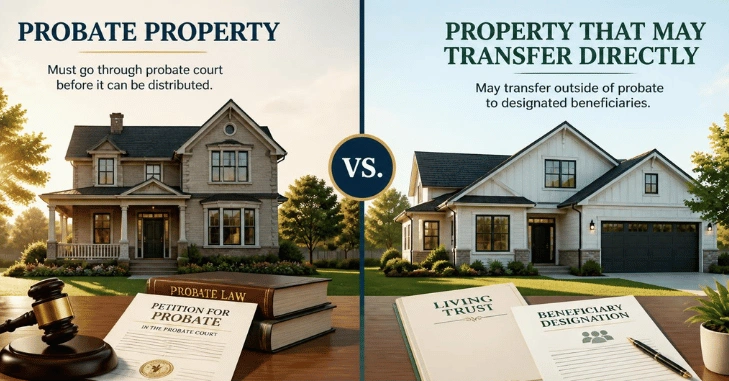
A house owned solely in one person’s name may require a different process than an account with a valid payable-on-death beneficiary.
Likewise, property owned with survivorship rights may pass differently from property owned solely by one person. Assets held in a trust may follow another set of instructions.
This distinction is useful because families sometimes assume that “estate” and “probate estate” always refer to the same group of assets. They may not.
Who Handles the Person’s Affairs After Death?
The person responsible for administering an estate is often called a personal representative. Depending on the circumstances and local terminology, that person may be an executor or an administrator.
An executor is commonly named in a will and may receive legal authority to act after the appropriate court process. An administrator is commonly appointed when no qualifying executor is available or when the person died without a valid will.
An estate representative may be responsible for collecting assets, paying valid debts, handling required filings, and distributing property to the appropriate people. Procedures and job titles can differ by jurisdiction.
| Term | What it generally means |
| Estate | Property and financial interests left after death. |
| Executor | A person named in a will to administer the estate once legally authorized |
| Administrator | A person is commonly appointed when an executor is unavailable or there is no qualifying will. |
| Personal representative | A broad term for the person legally responsible for handling estate affairs |
| Heir | A person who may inherit under applicable intestacy law |
| Beneficiary | A person or entity designated to receive property or benefits under a document or account |
What Happens If There Is a Will?
A valid will generally states how qualifying property should be distributed and may nominate an executor. However, the will does not necessarily control every asset the person owned.
For example, property already held in a trust or an account with a valid beneficiary designation may follow its own transfer rules.
A will may also need to be admitted to probate before a court recognizes it as the legally effective final will. The exact procedure depends on the state.
Debts and lawful claims can also affect what beneficiaries eventually receive. Valid estate debts may need to be paid before the remaining property is distributed according to the will.
What Happens Without a Valid Will?

Dying without a valid will is known as dying intestate. In that situation, state intestacy laws determine who receives probate property. The order of inheritance often prioritizes close relatives, but the exact shares and eligible heirs differ by state.
When a person dies intestate, distribution generally follows the probate and inheritance laws of the relevant state. This is one reason families should not assume that a surviving spouse automatically receives everything. The outcome can depend on whether there are children or surviving parents, how property is owned, marital rights, and applicable state law.
Do All Assets Go Through Probate?
No. A person’s death does not automatically send every asset through probate court. Some property can transfer directly to another person because of legal arrangements established before death.
Common examples may include property with survivorship rights, properly funded trust assets, and certain accounts or policies with valid beneficiary designations. Whether a specific asset avoids probate depends on the governing documents and applicable law.
This distinction can also affect how quickly property transfers and which documents a financial institution may require.
What Happens to Debts?
Death does not automatically erase valid debts. The estate administration process may require the representative to identify creditors, determine which claims are valid, and pay approved obligations from estate assets before distributing the remaining property.
That does not mean relatives automatically become personally responsible for every unpaid bill. Liability can depend on factors such as joint obligations, guarantees, property ownership, and state law.
Anyone dealing with a disputed or substantial claim should seek advice based on the estate’s jurisdiction and the terms of the underlying contract.
Taxes and Final Filings
Estate administration can involve federal and state tax responsibilities in addition to probate matters. A personal representative may be responsible for filing the deceased person’s final individual income tax return. Other tax filings may also be required depending on the estate’s circumstances.
For example, certain estates and trusts may need to file an income tax return. A federal estate tax return may also be required when an estate meets the applicable filing requirements.
State tax obligations can differ, so federal requirements are only one part of the review. Representatives should check the current rules that apply to the estate rather than assume that all estates have the same filing duties.
What to Do When You See the Term on a Legal Form

Start by identifying the role the form is asking about. Do not assume that the name of the person who died belongs in every blank. Check whether the form separately requests information about the estate, executor, administrator, heir, beneficiary, surviving spouse, trustee, or personal representative.
Next, identify the jurisdiction. Probate rules are mainly state-specific, so instructions from one state may not apply in another. Then, confirm whether a court proceeding has already been opened and whether someone has received formal authority to act. Banks, title companies, courts, and tax agencies may ask for documents proving that authority.
For another plain-English look at legal rights, claims, and professional representation, read Mindygest’s work injury lawyer guide.
Your Next Step
If you find this term on a probate, estate, tax, banking, or property document, identify the state, the document type, and the role you are being asked to fill before signing anything.
decedent court instructions can answer routine procedural questions. A probate or estate attorney can help with disputed property, creditor claims, unclear wills, family conflicts, or questions about legal authority. A qualified tax professional can help with filing obligations.
Frequently Asked Questions
It means the person who has died. Look carefully at the rest of the document because the estate, executor, administrator, trustee, heir, and beneficiary are separate legal roles.
They usually refer to the same person. “Deceased” is common in everyday and legal writing, while the other term is especially common in estate, trust, probate, and tax contexts.
Yes. A person can leave an estate whether or not a valid will exists. When there is no valid will, state intestacy law generally determines whownserits probate property.
Not necessarily. Some property may transfer outside probate because of survivorship ownership, trusts, beneficiary designations, or other legal arrangements. The exact rules vary by state and asset type.
A personal representative commonly handles valid estate debts using estate assets. Family members do not automatically become personally liable simply because they are relatives, although joint debts and other obligations can create separate liability issues.
The personal representative may be responsible for filing the deceased person’s final individual income tax return. Additional estate-related returns may also be required depending on the circumstances.