

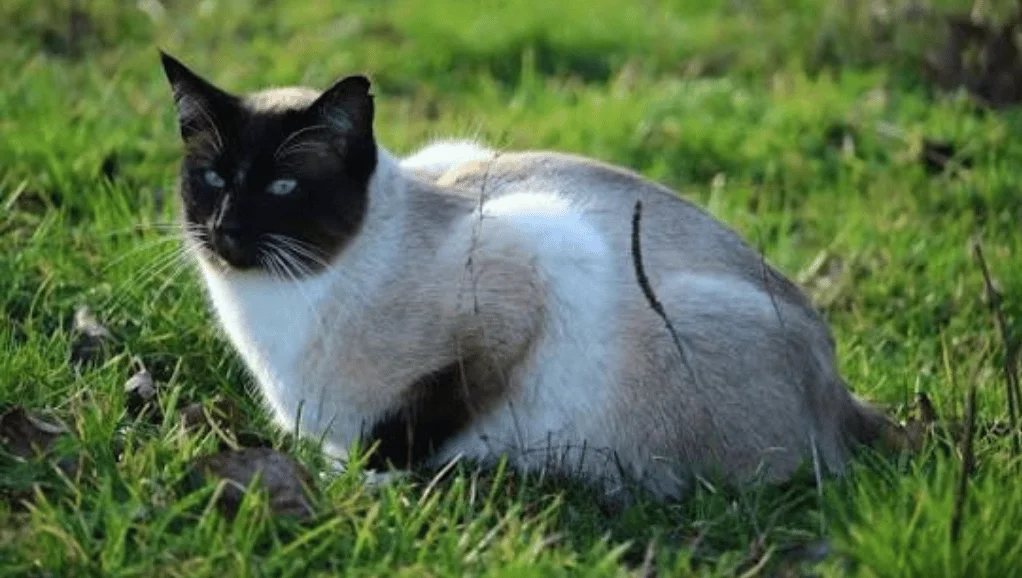
Black cats are not one breed, and their shared color can hide major differences in size, temperament, and care. This guide compares 12 black cat breeds that U.S. readers commonly research, from the Bombay to the Maine Coon. You’ll also learn how to recognize likely breed traits and choose a suitable household companion.
Black fur can appear in many pedigreed and mixed-breed cats. The Bombay is the only recognized breed that is always black. Other breeds, including Maine Coons, Persians, and American Shorthairs, can also have solid black coats. Coat color alone cannot confirm ancestry, so body structure and pedigree records matter.
Black Cats at a Glance
| Breed | Coat or appearance | Typical social style | Grooming level |
|---|---|---|---|
| Bombay | Short, glossy, always black | Affectionate and social | Low |
| American Shorthair | Dense, short coat | Easygoing and independent | Low |
| British Shorthair | Thick, plush coat | Calm and reserved | Low |
| Maine Coon | Long, shaggy coat | Gentle and social | Moderate |
| Persian | Long, flowing coat | Quiet and affectionate | High |
| Oriental Shorthair | Sleek, short coat | Vocal and people-focused | Low |
| American Curl | Short or long coat | Playful and adaptable | Low to moderate |
| Norwegian Forest | Dense semi-long coat | Friendly and playful | Moderate |
| Siberian | Thick triple coat | Playful and affectionate | Moderate |
| Sphynx | Fine, down, and pigmented skin | Highly social | Specialized |
| Cornish Rex | Short, wavy coat | Active and outgoing | Low |
| Devon Rex | Short, rippled coat | Playful and people-focused | Low |
These summaries reflect current breed information from TICA and other established pet references. Individual personality still varies considerably within every breed. Environment, early socialization, age, and health can influence behavior as much as ancestry.
Key Takeaways
- Black is a coat color rather than a single feline breed.
- The Bombay is the only breed that is exclusively black.
- Longhaired and shorthaired breeds can both produce solid black individuals.
- Physical appearance can suggest ancestry, but it cannot prove a pedigree.
- Choose a companion based on temperament, care needs, health, and household fit.
What Makes a Cat Solid Black?
Dark feline coats depend on pigment genes and the way pigment appears within each hair. UC Davis explains that the wild-type brown locus supports full black eumelanin production. Non-agouti genetics can also suppress visible tabby banding and create a solid appearance.
Other genes can change how that pigment appears. Dilution can turn black into gray or blue by altering pigment distribution within the hair shaft. This explains why coat color is more complicated than simply having one “black gene.”
12 Black Cat Breeds Worth Knowing
1. Bombay
The Bombay is the clearest match for people picturing a miniature black panther. TICA describes the breed as exclusively black, muscular, affectionate, and strongly people-focused. Its glossy coat and copper-to-gold eyes create its distinctive appearance.
2. American Shorthair
American Shorthairs can have solid black coats, although many other colors and patterns are recognized. Their sturdy bodies suit their generally relaxed and self-assured character. The dense short coat usually requires straightforward routine brushing.
3. British Shorthair
British Shorthairs are famous for blue-gray coats, but the breed occurs in numerous other colors. They have stocky bodies, rounded faces, and exceptionally dense plush coats. TICA describes them as affectionate yet independent companions that usually prefer calm interaction.
4. Maine Coon
A solid-black Maine Coon combines dramatic coloring with one of the largest domestic feline body types. TICA recognizes black among the breed’s solid colors and describes Maine Coons as gentle companions. Their shaggy coats usually benefit from regular combing.
Their size becomes easier to understand when you know basic feline structure. Mindygest’s cat anatomy guide explains how bones, muscles, paws, and other structures support feline movement. Those fundamentals can help owners observe body condition more carefully.
5. Persian
Black Persians combine a dark coat with the breed’s round face and long, flowing hair. TICA recognizes black among many Persian colors and describes the breed as gentle and quiet. The long coat requires more grooming commitment than most shorthaired alternatives.
6. Oriental Shorthair
Oriental shorthairs come in hundreds of color and pattern combinations, including solid colors. Their bodies are slender, athletic, and closely related in type to Siamese cats. TICA describes them as lively, vocal, intelligent, and strongly attached to their families.
7. American Curl
American Curls are immediately recognizable by ears that curve backward from the head. TICA states that the breed appears in all colors and patterns, with both coat lengths represented. These cats are generally playful, curious, and comfortable participating in household activities.
8. Norwegian Forest Cat
Norwegian Forest cats can appear in solid black and several other recognized colors. Their semi-long coats include dense underfur and protective guard hairs suited to colder conditions. The breed is typically interactive, playful, and comfortable climbing to high places.
9. Siberian
Siberians have substantial bodies and thick coats that change with the seasons. TICA recognizes a wide range of colors and describes these cats as lively and affectionate. Their dense triple coats generally need regular combing, especially during heavier shedding periods.
10. Sphynx
A black Sphynx looks different because its color appears mainly through pigmented skin and fine down. The breed is not completely hairless, despite its familiar appearance. TICA describes Sphynx cats as highly social, active, intelligent, and strongly attached to people.
11. Cornish Rex
Cornish Rex cats can occur in every recognized color and pattern, including solid dark coloring. Their defining feature is a short coat arranged in tight waves across a slender body. They are athletic, highly social, and usually happiest with regular interaction.
12. Devon Rex
The Devon Rex also comes in all colors, but its coat differs from the Cornish Rex. Devons have soft, short waves alongside large ears and prominent eyes. TICA describes them as intelligent, playful, active, and strongly interested in household activities.
How to Tell What Breed Your Black Cat Might Be
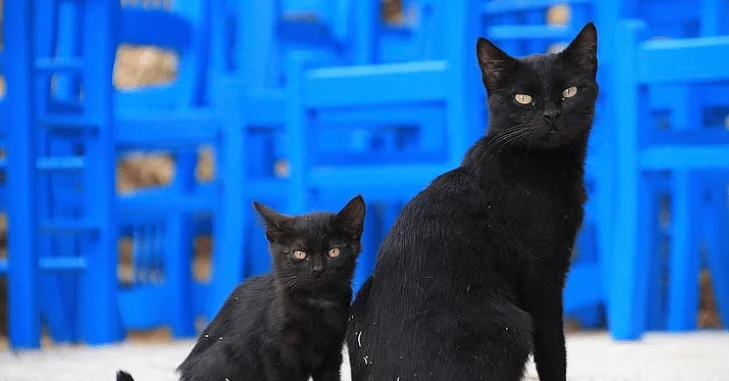
Start by looking beyond color because black fur can hide details that normally aid identification. Consider coat length, head shape, body proportions, ear structure, eye color, and overall build. A large, shaggy cat suggests different possibilities from a compact, short-haired animal.
Appearance still cannot establish pedigree with certainty. A shelter cat may resemble a Bombay, Persian, or Maine Coon without belonging to that registered breed. Reliable pedigree records provide stronger evidence than coat color or a photograph alone.
Visible differences should not become amateur medical diagnoses either. Mindygest’s guide on whether a cat can have Down syndrome explains why appearance cannot identify a medical condition. New movement, breathing, eating, or behavioral changes deserve appropriate veterinary attention.
Choosing the Right Black Cat for Your Home
Start with lifestyle rather than appearance. An Oriental Shorthair may suit someone wanting frequent interaction, while a British Shorthair can be more independent. Longhaired breeds also require more grooming time than sleek shorthaired companions.
U.S. adopters can also consider mixed-breed cats at local shelters and rescue organizations. Black cats are not rare, and coat color does not determine whether an animal will be affectionate. Individual behavior and household compatibility deserve more weight than color alone.
If you choose a breeder, ask for pedigree documentation and breed-relevant health information. If you adopt, ask shelter staff about energy level, handling, other pets, and known medical history. Continue exploring practical pet content through the Mindygest Lifestyle section.
Frequently Asked Questions
Which black cat breeds are always black?
The Bombay is the only recognized breed that is exclusively black. Its breed standard calls for a sleek dark coat alongside characteristic gold or copper eyes. Other breeds can produce black individuals, but they also occur in different colors.
Are all black cats Bombay cats?
No, most dark-coated cats should not automatically be labeled Bombays. Numerous pedigreed breeds and mixed-breed domestic cats can have solid black coloring. A true Bombay is a specific, pedigreed breed rather than another name for a color.
How can I tell whether my black cat is a Bombay?
Bombays typically have short, glossy coats, rounded features, muscular bodies, and copper or gold eyes. Those characteristics can suggest the breed, but they are not definitive proof. Pedigree documentation provides much stronger confirmation than appearance alone.
Are black cats rare?
Black coloring itself is not rare among domestic cats. Several recognized breeds can produce solid black individuals, while mixed-breed cats can carry the color too. Pedigreed Bombays are much less common than ordinary dark-coated domestic cats.
Are black cats more affectionate than other cats?
Coat color does not reliably predict whether a cat will enjoy cuddling or frequent handling. Breed tendencies can offer useful context, but each animal develops an individual temperament. Meeting an adult cat before adoption often reveals more than color ever could.
Finding the Right Companion
A dark coat can appear on cats with dramatically different bodies, personalities, and grooming requirements. Focus on health, temperament, activity level, and daily care before choosing based on appearance. The right match is the animal whose needs fit your household for the years ahead.

